

When artificial planting is specified for a commercial space, fire performance can’t be left to assumption. The term fire retardant is widely used, but what sits behind those two words can vary considerably from one product to another.
Here, we look at what you should be asking before artificial planting makes its way into your next commercial project.
Back to blogDoes your artificial planting actually meet the fire standard you think it does?
When artificial planting is specified for a commercial interior, the words fire retardant can seem reassuring. The box appears to be ticked, the product seems suitable, and attention can turn to visible details such as species, size, shape and how the planting fits the design brief. But fire retardant is not a fire standard.
Products can achieve their fire performance in different ways, be tested using different methods and be certified to different standards, which means two artificial plants can both be described as fire retardant while having very different testing and certification behind them.
For a decorative plant sitting somewhere out of reach, that gap might easily be overlooked, but in a busy hotel, restaurant, airport, shopping centre or attraction, where artificial planting can sit above people, run alongside walkways or form part of the furniture around them, it deserves a lot more attention.
Look beyond the words ‘fire retardant’
The first thing worth discovering is how the product achieves its fire performance. Some artificial foliage is manufactured with fire retardant properties within the material itself, while other products have a treatment applied afterwards. The difference matters, particularly as an applied treatment is not something we would recommend when fire performance forms part of the specification.
Whatever method is used, the claim shouldn't simply be taken at face value. What matters is the testing behind the product, the standard it has been tested against and the certification available to support it. The words fire retardant alone don't tell you enough.
This is where asking for the paperwork matters. A certificate gives you something tangible to check against the specification rather than relying on a description on a product page or quotation and, more importantly, gives you the reassurance of having the correct documentation to hand when a fire safety officer pays a visit.

Not every standard is interchangeable
Fire standards vary between countries and industries, so a product having passed one test does not automatically mean it satisfies every fire requirement it might encounter on another project.
This becomes particularly important on international projects, where a planting specification originally developed for one country may need to meet an entirely different requirement when the same concept is used elsewhere.
Establishing the required standard at the beginning means the proposed foliage can be checked accordingly for the country and space it is going into.
What happens when the planting is bespoke?
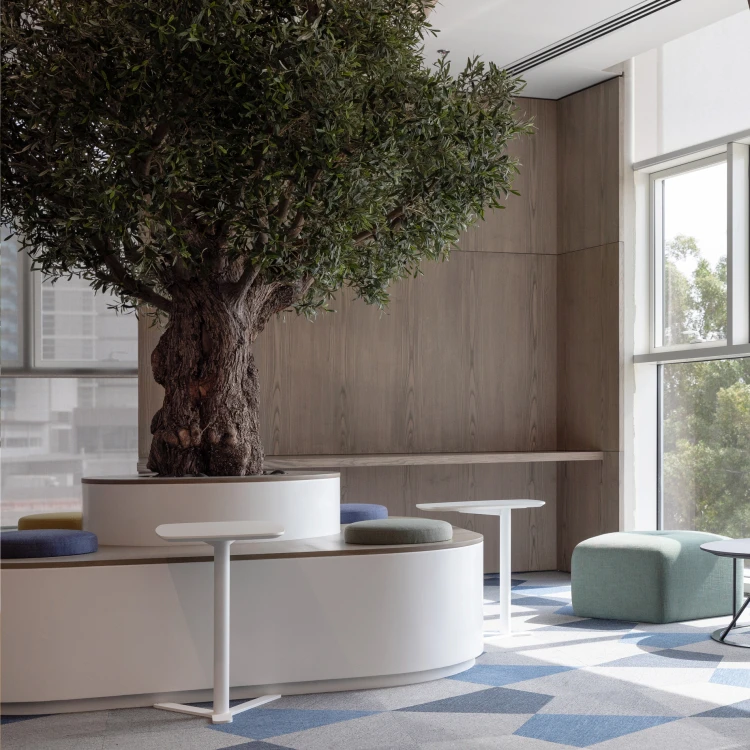
A five metre tree may look like one object when you walk past it, but from a manufacturing point of view it can be made up of numerous elements.
The internal framework, trunk, branches, foliage, fixings and finishing materials all form part of what eventually enters the building, which makes the specification more involved than simply choosing fire retardant foliage.
This is why fire requirements should be discussed while a bespoke piece is still being developed, allowing them to inform the materials selected and the way the tree is manufactured rather than becoming something that has to be solved once the design has already been finalised.
That doesn't mean compromising what the designer wants to create. Some of the largest and most unusual trees we manufacture are destined for spaces with strict fire requirements, so the technical decisions are made behind the scenes while the original design remains at the forefront.
So, what should you ask?
Before specifying artificial planting for a commercial project, don't stop at asking whether it is fire retardant. Ask which standard the product has been tested to, request the relevant certification and make sure that documentation applies to the foliage being supplied.
For bespoke planting, bring the fire requirements into the conversation early so they can form part of the manufacturing process, rather than something that needs to be addressed further down the line.
It is a relatively small conversation to have at the beginning of a project, but an important one, because when a specification says fire retardant, it should mean considerably more than two words on a page.